

Where to find it: Settings → Return Settings → Return Automation — Open in OTO ↗
Rules
Settings → Return Settings → Return Automation holds a list of Existing Rules, searchable, each on its own card, and an Add New Rule button.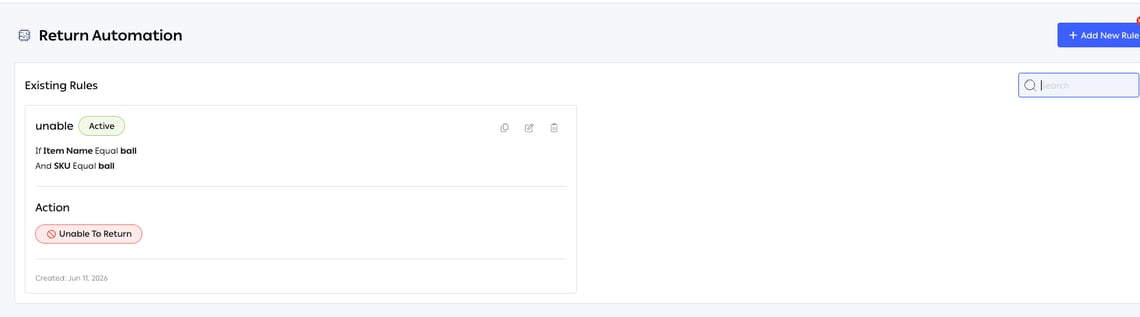
Fig. 1 — A rule reads as a sentence: If Item Name Equal ball, And SKU Equal ball → Unable To Return.
Building one
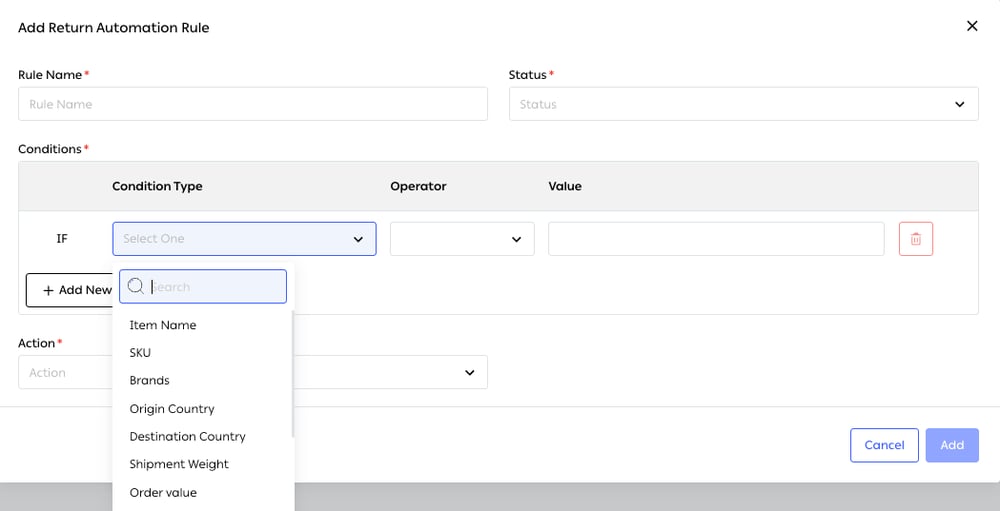
Fig. 2 — Conditions are rows of Condition Type · Operator · Value, stacked with Add New.
Condition types cover both the item and the shipment: Item Name, SKU, Brands, Origin Country, Destination Country, Shipment Weight, Order value and the custom reference fields, among others.
The action observed in the product is Unable To Return: the matched items cannot be returned at all.
What else the policy is made of
Rules are one of three things enforcing your policy, and they work together:Enforce at the portal, not at the warehouseEvery rule that is applied when the request is made saves a collection, a transit, a receipt and a difficult conversation. Every rule applied after the parcel has arrived has already cost you all four.So the test for a new rule is simple: could the customer have been told this before they packed the box?
Choosing the carrier for the way back
A reverse shipment needs a carrier just as an outbound one does, and it is chosen the same way. Shipping automation handles the return leg, and its test tool carries a Reverse Shipment toggle so a rule set can be checked against a return rather than a delivery. That matters because the two legs are genuinely different problems. The outbound leg optimises for speed to a customer who is waiting; the return leg optimises for cost, because nobody is. A carrier that is right for one is frequently wrong for the other, and pricing for the return is set separately — the Return Order Fee sits alongside delivery price in shipping prices.Return fraud detection
Return fraud is a real and growing cost: the box that comes back empty, the item swapped for a counterfeit, the customer whose return rate is an order of magnitude above everyone else’s, the wardrobing that returns worn goods as new. Detecting it means spotting patterns a person working one return at a time cannot see — across a customer’s history, across reasons, across the gap between what was requested and what arrived.Related
- Customer returns — the policy settings on the portal.
- Shipping automation — carrier rules, including the return leg.
- Returns receiving — where a rule that was not applied ends up.